

The BMW XM combines high-performance engineering with advanced suspension technology and the comfort expected of a luxury SUV. Its steering, suspension and tyre systems play an important role in maintaining vehicle stability, handling and driving comfort.
Correct wheel alignment is an important part of maintaining these characteristics. Even relatively small deviations from the manufacturer’s specified alignment settings can affect steering response, straight-line stability and tyre wear.
Understanding how BMW XM wheel alignment works, what causes misalignment and when an inspection may be necessary can help owners maintain the vehicle’s handling characteristics and avoid unnecessary tyre wear.
What Is Wheel Alignment in the BMW XM?
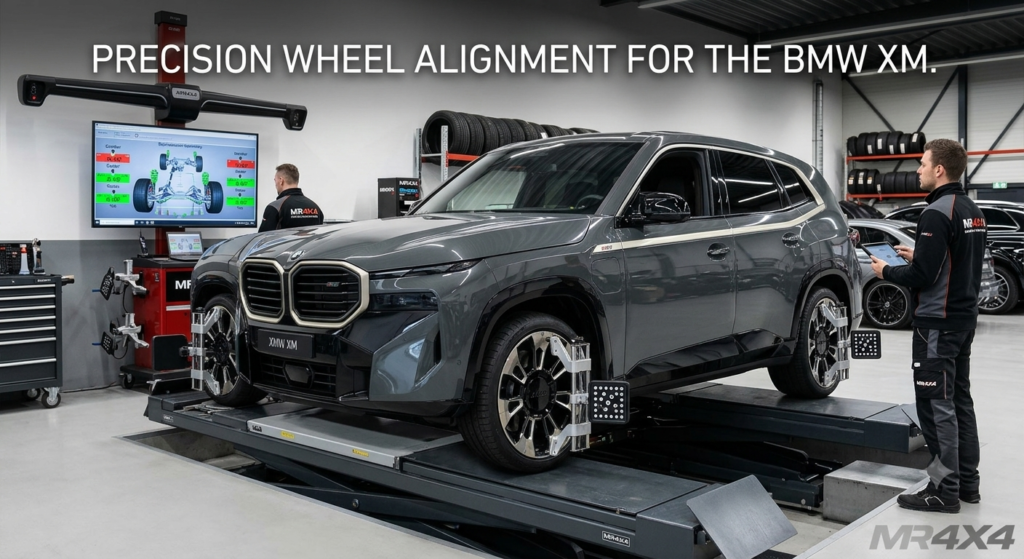
Wheel alignment involves measuring the angles of the wheels and comparing them with the specifications established by the vehicle manufacturer.
These measurements help determine whether the wheels are correctly positioned in relation to the suspension, steering system and road surface.
The three principal wheel alignment angles are:
- Camber: The inward or outward inclination of a wheel when viewed from the front of the vehicle. Incorrect camber can contribute to uneven tyre wear and affect cornering characteristics.
- Caster: The angle of the steering axis when viewed from the side of the vehicle. Caster influences steering stability, steering feel and the tendency of the steering wheel to return towards its central position.
- Toe: The direction in which the wheels point relative to the vehicle’s centreline when viewed from above. Incorrect toe settings can contribute to accelerated tyre wear and changes in steering response.
On the BMW XM, alignment measurements should be compared with the appropriate BMW specifications for the vehicle.
Not every alignment angle is necessarily adjustable. Where a measurement falls outside the permitted tolerance, further inspection may be required to determine whether adjustment, component repair or replacement is necessary.
Common Causes of Wheel Misalignment
Wheel misalignment can develop following impacts or changes affecting the vehicle’s suspension and steering geometry.
Common contributing factors include:
- Driving over deep potholes
- Striking a kerb while parking or manoeuvring
- Impact with road debris or other obstacles
- Damaged or deteriorated suspension components
- Worn steering joints or suspension bushes
- Previous suspension or steering repairs
- Incorrectly installed or damaged suspension components
An impact does not always produce immediately visible damage. However, it may alter suspension geometry or affect components responsible for maintaining the correct wheel position.
The BMW XM’s weight, performance capabilities and suspension design make it particularly important to investigate changes in steering behaviour or tyre wear following a significant impact.
Before carrying out wheel alignment adjustments, the condition of the relevant suspension and steering components should be checked. Alignment adjustments alone cannot correct problems caused by damaged or excessively worn components.
Warning Signs That Your BMW XM Needs Wheel Alignment
Wheel misalignment can produce several noticeable symptoms. Recognising these signs may help identify a problem before excessive tyre wear or changes in handling become more pronounced.
1. Vehicle Pulling to One Side
If the BMW XM consistently pulls towards the left or right while travelling on a relatively level road, incorrect wheel alignment may be a contributing factor.
However, tyre pressure differences, tyre condition, road camber and certain braking or suspension problems can produce similar symptoms.
Further inspection may therefore be necessary to establish the cause.
2. Uneven Tyre Wear
Uneven tyre wear is one of the most common indicators of possible alignment problems.
Excessive wear along the inner or outer edges of a tyre can be associated with incorrect camber or toe settings, although tyre pressure, driving conditions and suspension defects can also influence wear patterns.
Regular inspection of the tyre tread can help identify abnormal wear before the tyre reaches its replacement limit.
3. Off-Centre Steering Wheel
A steering wheel that is no longer centred when the vehicle is travelling straight may indicate incorrect alignment or another steering-related issue.
The steering wheel position should be assessed alongside the vehicle’s alignment measurements and the condition of its steering components.
4. Changes in Steering or Handling
Changes in steering response, straight-line stability or the way the vehicle behaves during cornering may indicate an alignment or suspension problem.
Steering-wheel vibration can also occur, although this is more commonly associated with other issues such as wheel imbalance, tyre defects or damaged components.
A complete inspection is important because these symptoms do not always originate from wheel alignment.
Benefits of Correct Wheel Alignment
Maintaining the correct wheel alignment can contribute to several aspects of the BMW XM’s performance and overall condition.
Steering Stability and Handling
Correct alignment helps maintain predictable steering response and stable vehicle behaviour.
The relationship between wheel angles, suspension geometry and tyre contact with the road is particularly important in a high-performance SUV such as the BMW XM.
More Even Tyre Wear
Incorrect alignment can cause tyres to wear unevenly or more rapidly than expected.
The BMW XM may be equipped with wide, high-performance tyres, depending on its specification. Maintaining the correct alignment can help reduce avoidable tyre wear and support tyre longevity.
Driving Efficiency
Incorrect wheel alignment, particularly excessive toe deviation, can increase tyre scrub and rolling resistance.
Maintaining the correct alignment may help avoid unnecessary energy consumption, although actual fuel and electrical energy usage also depends on driving conditions, tyre pressure and other vehicle operating factors.
Suspension and Steering Condition
Wheel alignment inspections can also provide an opportunity to identify damaged or deteriorated steering and suspension components.
However, correct alignment does not eliminate normal component wear, and mechanical defects should be addressed before any necessary alignment adjustments are completed.
When Should BMW XM Owners Check Wheel Alignment?
There is no single wheel alignment inspection interval that applies to every BMW XM or driving situation.
Owners should follow BMW’s applicable maintenance guidance and consider an alignment inspection when symptoms or circumstances suggest that the vehicle’s suspension geometry may have changed.
An inspection may be appropriate:
- Following a significant pothole or kerb impact
- When abnormal or uneven tyre wear is identified
- If the vehicle consistently pulls to one side
- When the steering wheel appears off-centre
- Following repairs involving relevant steering or suspension components
- When changes in steering response or straight-line stability are noticed
- When fitting replacement tyres, particularly if the previous tyres show signs of abnormal wear
Before measuring or adjusting wheel alignment, tyre pressures, tyre condition and relevant suspension and steering components should be inspected.
The BMW XM’s applicable manufacturer procedures should also be followed, including any specified vehicle loading conditions, ride-height requirements or other preparation necessary for accurate alignment measurements.
Why BMW XM Wheel Alignment Requires Accurate Measurement
Modern wheel alignment equipment measures the position and orientation of the wheels to determine whether the vehicle’s geometry falls within the manufacturer’s specified tolerances.
For the BMW XM, accurate measurements are important because suspension geometry influences steering response, vehicle stability and the way forces are distributed across the tyres.
The vehicle’s suspension design and electronically controlled systems also mean that the appropriate BMW procedures should be considered when carrying out alignment-related work.
Depending on the vehicle specification and repairs performed, additional checks or calibration procedures may be required.
A complete alignment assessment should therefore involve more than simply adjusting wheel angles. It should establish whether the measured geometry is correct and whether any underlying mechanical condition requires attention.
BMW XM Wheel Alignment and Tyre Wear
Tyre wear patterns can provide useful information when investigating possible wheel alignment problems.
For example, excessive toe deviation can cause tyres to scrub across the road surface rather than rolling in their intended direction. This may accelerate tread wear and produce characteristic wear patterns.
Camber deviations can also influence how tyre load is distributed across the tread, potentially contributing to increased wear along one edge.
However, tyre wear patterns should not be used as the sole basis for diagnosing wheel misalignment.
Tyre inflation, suspension condition, driving habits and previous wheel or suspension damage may all contribute to abnormal wear.
Combining tyre inspection with accurate alignment measurements and mechanical checks provides a more reliable assessment of the vehicle’s condition.
Conclusion
Correct wheel alignment is an important part of maintaining the BMW XM’s steering characteristics, handling stability and tyre condition.
Because wheel alignment is closely related to suspension geometry, tyre performance and steering behaviour, changes in these areas should be investigated rather than assuming that an alignment adjustment alone will resolve the problem.
Accurate measurements, appropriate mechanical inspections and adherence to BMW’s specified procedures can help identify alignment-related issues and prevent unnecessary tyre wear.
MR4X4 provides BMW XM servicing, maintenance and diagnostic support from its London workshop, including suspension and steering system inspections.
No Half Measures MR4X4!